

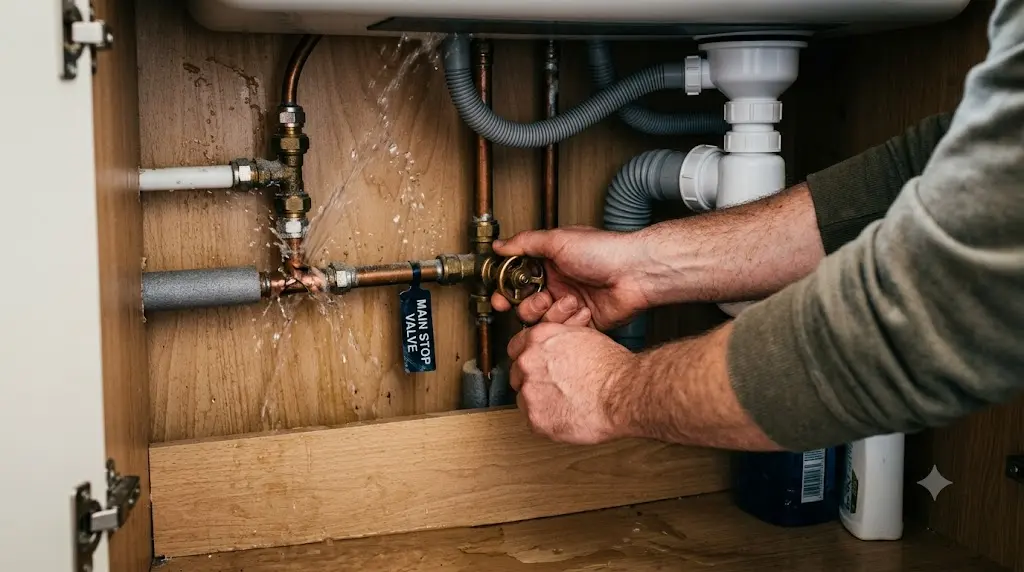
Turn off your stopcock immediately. That single action stops fresh water entering your pipework and is the most important thing you can do in the first five minutes of a burst pipe emergency. Everything else, from protecting your electrics to limiting damage to your floors, comes after that first step.
A burst pipe rarely gives any warning. One moment your kitchen is dry, the next you are stepping into water that seems to be coming from nowhere in particular. The instinct to panic is normal, but the next few minutes matter more than almost any other part of the process, including the repair itself. Here is exactly what to do, in order.
1. Locate and Turn Off the Stopcock
Every home in the UK has a stopcock (sometimes called a stop valve) that controls the mains water supply into the property. It is usually found under the kitchen sink, in a downstairs cupboard, under the stairs, or near where the water pipe enters the house, often close to the meter box if you have one.
Turn it clockwise until it will not move any further. This cuts off the supply feeding the burst, so even though water already in the pipes will keep draining out for a short while, the flow will slow dramatically and eventually stop.
If you cannot find the stopcock in a panic, do not waste more than a minute searching. Move on to the next step and keep looking once the situation is more under control. This is also a good moment to make a mental note (or better, a label on the valve itself) so this is never an issue again.
2. Switch Off the Electricity at the Fuse Board
Water and electricity are a dangerous combination. If the leak is anywhere near sockets, light fittings, or appliances, go to your fuse board and switch off the relevant circuits, or the whole supply if you are unsure which circuit is affected.
Never touch the fuse board if you are standing in water or if the board itself is wet. In that case, stay clear and wait for a professional rather than risking an electric shock.
3. Open the Taps to Relieve Pressure
Once the stopcock is off, open cold taps around the house, starting with the one closest to the burst. This drains the water still sitting in the pipework and relieves pressure, which reduces the amount that continues to leak out while you wait for help. If you have a combi boiler or a hot water cylinder, open the hot taps too so both systems empty out fully.
4. Contain the Water and Protect Your Belongings
With the flow slowed or stopped, shift your attention to limiting the damage already done. Move furniture, rugs, electronics, and anything valuable away from the affected area. Use towels, buckets, or a wet vacuum to soak up standing water, particularly on wooden or laminate flooring, which can warp or swell within hours if left wet.
If water is coming through a ceiling, place a bucket underneath and, if it is safe to reach, pierce the bulging area of plasterboard with something like a screwdriver. This sounds counterintuitive, but it lets the trapped water drain in a controlled way rather than the ceiling collapsing under the weight later.
5. Take Photos Before You Start Cleaning Up
Before you dry everything out and move things back into place, take clear photos or a short video of the damage. This includes the source of the leak if you can see it, the affected flooring, walls, and any belongings that have been damaged. Insurers almost always ask for this evidence, and it is far easier to capture it in the moment than to reconstruct it later from memory.
6. Call an Emergency Plumber
Once the immediate danger is contained, call a plumber who offers emergency callouts. A burst pipe is very rarely a standalone event. It usually points to an underlying cause such as frozen pipework, corrosion, old fittings, or excessive water pressure, and a professional will need to identify and fix that cause, not just patch the visible leak.
Give the plumber as much detail as you can over the phone: where the burst is, whether the stopcock is off, and whether electricity has been affected. This helps them arrive prepared with the right parts and tools.
What Not to Do in a Burst Pipe Emergency
A few common mistakes make the situation worse rather than better.
- Do not attempt to repair or cut into the pipe yourself if you are not confident doing so, as this can turn a contained leak into a much larger one.
- Do not ignore a small trickle, assuming it will stop on its own. Pressure can build again once the pipe warms up or shifts slightly.
- Do not use any electrical appliances that have come into contact with water until they have been checked and confirmed safe.
- Do not delay calling a plumber in the hope the problem will resolve itself overnight.
Why Burst Pipes Happen
Understanding the cause helps prevent a repeat emergency. The most common triggers in the UK are freezing temperatures during winter, which cause water inside pipes to expand and crack the pipework from within, along with old or corroded pipes, high water pressure, and poor insulation in lofts, garages, and outbuildings. A plumber can assess your system afterwards and recommend fixes such as lagging exposed pipework or fitting a pressure reducing valve.
Frequently Asked Questions
How do I find my stopcock quickly in an emergency?
Check under the kitchen sink first, as this is the most common location in UK homes, followed by cupboards under the stairs, utility rooms, or near the boiler.
Should I turn off my boiler during a burst pipe?
Yes, if the burst pipe is connected to your heating system or hot water cylinder, switch off the boiler as well as the stopcock to avoid it running dry or overheating.
Can a burst pipe be an emergency even if the leak looks small?
Yes. A small trickle can indicate pressure building behind a weak point in the pipe, and it can escalate quickly with no further warning.
Will home insurance cover a burst pipe?
Most UK home insurance policies cover burst pipe damage as standard, though this varies by provider, so check your policy and keep photographic evidence of the damage and the cause.
How long does it take a plumber to fix a burst pipe?
A straightforward repair to an accessible pipe can often be completed within an hour or two, though repairs involving walls, floors, or hidden pipework take longer.