
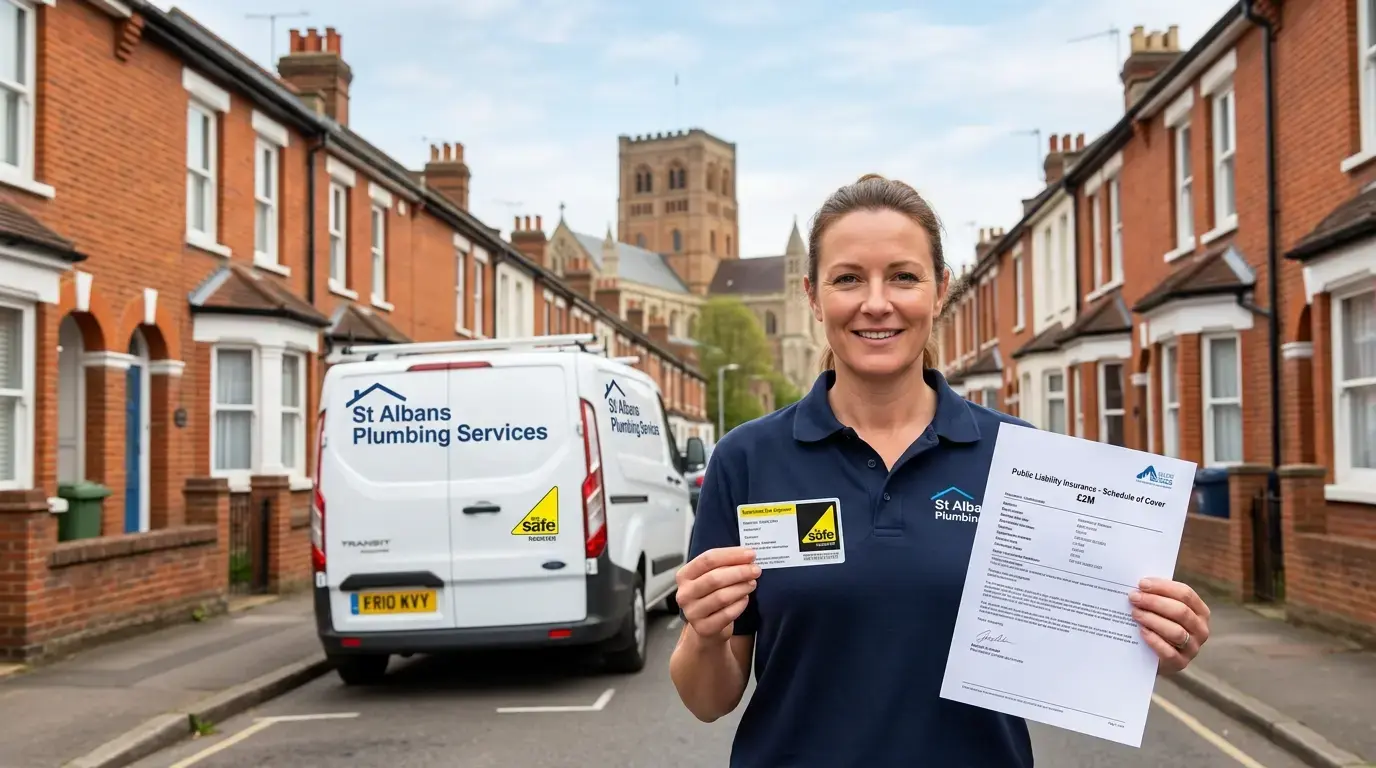
Finding a certified and insured plumber in St Albans starts with two checks: their Gas Safe registration (if the job involves gas) and proof of current public liability insurance. Once those two boxes are ticked, everything else—reviews, quotes, and trade memberships—helps you narrow the list down to someone you can actually trust in your home.
St Albans has a mix of Victorian terraces, 1930s semis in Marshalswick, and newer builds around London Colney and Sopwell, and each type of property tends to throw up different plumbing quirks. That’s exactly why homeowners here can’t just pick the first name that comes up on Google. This guide walks you through the whole process, step by step, so you end up with a plumber who is qualified, properly covered, and actually good at the job.
Why Certification and Insurance Actually Matter
A lot of homeowners assume “certified” just means someone did a training course once. In reality, for plumbing and especially gas work, it’s a legal requirement, not a nice-to-have. In reality, for plumbing and especially gas work, it’s a legal requirement, not a nice-to-have.
If a plumber ever touches a boiler, gas hob, or gas central heating system, they must be on the Gas Safe Register by law. This register replaced the old CORGI scheme in 2009 and is overseen by the Health and Safety Executive. Hiring someone who isn’t registered for gas work isn’t just risky; it’s illegal, and it puts your household at genuine risk of carbon monoxide exposure.
Insurance matters for a completely different reason. Even the most experienced tradesperson can accidentally damage a pipe, flood a bathroom, or crack a tile while working. Public liability insurance means you’re not left covering the cost if something goes wrong on the job.

Step 1: Confirm Gas Safe Registration First
Before you even discuss the job, ask to see the plumber’s Gas Safe ID card. It will have their photograph, a registration number, and a list of the specific types of gas work they’re qualified to carry out. Not every registered engineer is licensed for every type of gas appliance, so it’s worth checking the card matches the job you need doing.
You don’t have to take the card at face value either. You can verify it in a couple of ways:
- Visit the official Gas Safe Register website and search using the licence number
- Call the free Gas Safe helpline and ask them to confirm the registration
- Text the engineer’s number to the official Gas Safe checking service
This only takes a couple of minutes, and it’s the single most important check you can make if the job involves gas.
Step 2: Ask to See Public Liability Insurance
Most reputable plumbers in St. Albans will happily show you a copy of their insurance certificate, and many list their cover level on their website or business profile. As a general guide, look for at least £1 million in public liability cover for domestic jobs and more for larger commercial projects.
If a plumber hesitates or brushes off the question, treat that as a warning sign. Insurance is a normal, expected part of running a legitimate trade business, not an unusual request.
Step 3: Check Trade Body Memberships
Beyond Gas Safe, several other bodies indicate a plumber takes their trade seriously:
- APHC (Association of Plumbing and Heating Contractors)
- CIPHE (Chartered Institute of Plumbing and Heating Engineering)
- WaterSafe, which covers general water fitting work, not just gas
Membership isn’t compulsory like Gas Safe registration, but it shows a plumber has been assessed against recognised standards and follows an industry code of practice.
Step 4: Read Reviews from Real Local Customers
Once you’ve confirmed the paperwork, reputation is your next filter. Checkatrade, TrustATrader, and Google Reviews all give a decent picture of how a plumber actually performs once they’re inside someone’s home.
Rather than just glancing at the star rating, read a handful of the written reviews and look for patterns. Are customers mentioning punctuality? Do they say the plumber cleaned up after the job? Is there any mention of hidden costs or delays? A few dozen consistent, detailed reviews tell you far more than a headline score.
Step 5: Get a Written Quote Before Any Work Starts
A properly run plumbing business in St. Albans will give you a written quote, not just a verbal figure over the phone. This should outline the cost of labor, materials, and any call-out charge, along with an estimated timeframe for the work.
Written quotes protect both sides. They give you something to refer back to if the final bill looks different from what was agreed, and they give the plumber a clear record of what was promised.
Questions Worth Asking Before You Book
A short phone call before booking can save a lot of hassle later. Some useful questions to ask include
- Are you Gas Safe registered, and can you send proof?
- Do you carry public liability insurance, and how much cover do you have?
- Do you charge a flat rate or an hourly rate, and is there a call-out fee?
- Do you offer any guarantee on your work?
- How soon can you attend, and do you cover emergency call-outs?
A plumber who answers these clearly and without hesitation is usually one who’s confident in how they run their business.
Warning Signs to Watch Out For
A few red flags tend to show up again and again with unreliable tradespeople:
- Reluctance to provide certification or insurance documents
- Requests for a large deposit before any work has started
- Prices that seem unusually low compared to other local quotes
- No fixed business address or landline number
- Vague or evasive answers about qualifications
Trust your instincts here. If something feels off during that first conversation, it’s usually worth getting a second opinion.
Why Local Knowledge Matters in St. Albans
Plumbing problems in St. Albans aren’t always straightforward, largely because of the age and variety of the housing stock. A plumber who regularly works in the Cathedral Quarter or on the older Victorian terraces near the city center will already understand the kind of pipework, water pressure issues, and heating systems common to those properties. That local experience often means faster diagnosis and fewer surprises once the work begins.
The same applies to newer developments around London Colney or Fleetville, where underfloor heating and modern unvented cylinders are more common. A plumber familiar with both older and newer systems is generally better placed to handle whatever your property throws at them.
Frequently Asked Questions
Is it illegal to hire a plumber who isn’t Gas Safe registered for gas work?
Yes. Any work on gas appliances, boilers, or gas pipework in the UK legally requires a Gas Safe registered engineer. This applies to homeowners and landlords alike.
How much public liability insurance should a plumber have?
Most domestic jobs are adequately covered by £1 million to £2 million in public liability insurance, though larger commercial jobs may require higher cover.
Can I check a plumber’s Gas Safe status myself?
Yes. You can search the official Gas Safe Register website using the engineer license number or call the free Gas Safe helpline to confirm registration.
Do all plumbers need to be Gas Safe registered?
No, only if their work involves gas appliances or gas pipework. A plumber who only handles water systems, drainage, or bathroom fitting doesn’t need Gas Safe registration, though other qualifications still apply.
What’s the quickest way to find a certified and insured plumber in St. Albans?
Start by shortlisting local plumbers, checking their Gas Safe and insurance documents directly, and then confirm their reputation through recent reviews before requesting a written quote.