
How to Find Your Stopcock Before a Plumbing Emergency Hits
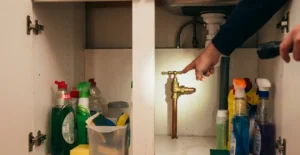
Your internal stopcock is most commonly found under the kitchen sink, where the mains supply pipe first enters the home. If it is not there, check the downstairs bathroom, the airing cupboard, the utility room, or a hallway cupboard near the front door. Turning it clockwise will shut off your entire mains water supply within a few minutes.
That is the short answer. But if you want to be truly prepared, read on, because knowing where it is and knowing how to use it are two different things.
What Exactly Is a Stopcock and Why Does It Matter?
A stopcock, also known as a stop tap, stop valve, or mains water tap, is a valve that controls the flow of mains water entering your property. It sits between two sections of pipe and looks very much like a brass tap without a spout. It either has a small T-shaped handle or a round wheel on top. Some modern properties have lever-type stopcocks that turn a quarter turn to open or close.
Despite the stopcock being the main water valve in every UK home, almost seven million UK citizens have no idea what a main stopcock valve is, and a quarter of homeowners have never even tried to find theirs.
That is a genuinely alarming statistic when you consider what a burst pipe or a failed washing machine hose can do to a home in the space of a few minutes. Water damage caused by uncontrolled flooding can run into thousands of pounds, and much of it is entirely avoidable if you can simply cut the water supply quickly.
Shutting off the stopcock can prevent a minor problem from becoming a major one that might create a flood, causing hundreds or even thousands of pounds worth of damage to your home.
Think of the stopcock as the emergency brake for your water system. You would never drive a car without knowing where the handbrake is. The same logic applies here.
What Does a Stopcock Look Like?
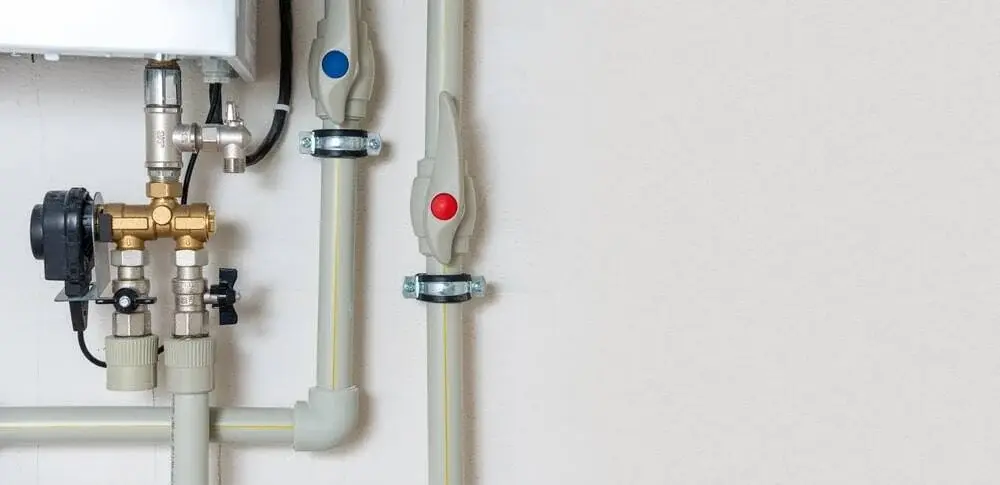
Before you go hunting for yours, you need to know what you are looking for. A standard internal stopcock looks like a brass tap without a spout. It sits between two sections of copper pipe and usually has a T-shaped handle or a small wheel on top.
The body is typically made of brass, copper, or in newer installations, plastic. It is always positioned in line with the pipe rather than branching off at an angle. This distinguishes it from other isolation valves you might find under sinks or behind toilets, which are much smaller and only control a single appliance.
Gas valves usually feature a bright yellow handle or sit on a yellow-coded pipe, and boiler isolation valves are much smaller and typically found directly underneath the boiler unit, so you are unlikely to confuse those with your stopcock once you know what you are looking for.
Where to Find Your Internal Stopcock
The internal stopcock is the one you will use in most household emergencies. Here are the most common locations to check, in order of likelihood.
Under the Kitchen Sink
In most homes, the stopcock is located under the kitchen sink. Open the cabinet doors, push any cleaning products or bins out of the way, and look toward the back wall where the water supply pipe comes through. The stopcock will be fitted directly onto this pipe, usually between 15 and 45 centimetres above floor level.