

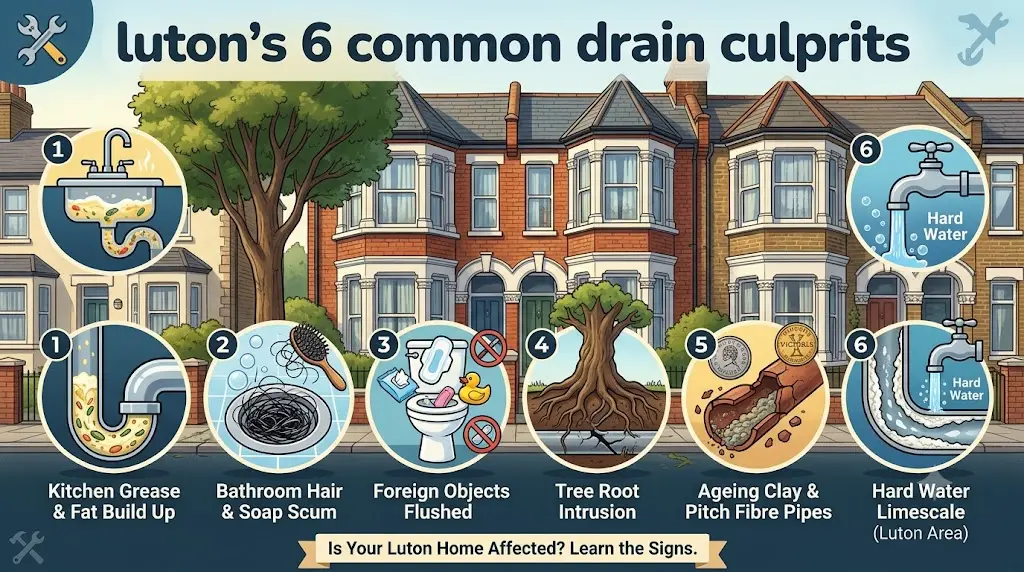
The most common causes of blocked drains in Luton homes are grease and fat build up in kitchen pipes, hair and soap scum in bathroom drains, foreign objects flushed down toilets, tree root intrusion in outdoor drainage, and ageing clay pipework found in Luton’s many Victorian and Edwardian properties. Hard water from the local Affinity Water supply also plays a role, as limescale gradually narrows pipes and slows drainage over time.
If your sink is draining slowly, your toilet is gurgling, or water is backing up somewhere in your home, one of these five culprits is almost always to blame. Here is a closer look at each one, along with what makes Luton properties particularly prone to them.
1. Grease and Fat Build Up in Kitchen Drains
Kitchen sinks are the number one cause of blocked drain callouts across Luton, and the reason is almost always the same. Cooking oil, fat, and grease go down the sink as a liquid, but they cool and solidify inside the pipe within minutes. Over weeks, this creates a waxy layer that traps food scraps, coffee grounds, and rice, until the pipe narrows so much that water can barely pass through.
This problem tends to build gradually. A sink that takes a little longer to drain each week is usually a warning sign of grease accumulation, not a one off issue that will fix itself.
2. Hair and Soap Scum in Bathroom Drains
Bathroom drains face a different but equally common problem. Hair combines with soap scum, shampoo residue, and skin cells to form a dense, sticky clog that wraps around the drain trap. Because hair does not break down easily, it acts like a net that catches everything else that follows it into the pipe.
Combined with Luton’s hard water, which leaves mineral deposits on pipe walls, this mixture hardens further and becomes much tougher to clear with a simple plunger.
3. Foreign Objects Flushed or Rinsed Away
Toilets and sinks are frequently blocked by items that were never meant to enter the drainage system. Wet wipes, sanitary products, cotton buds, and even children’s toys are common finds during drain inspections in Luton homes. Many wipes are labelled as flushable, but they do not disintegrate the way toilet paper does, and they frequently combine with grease elsewhere in the system to form dense blockages known as fatbergs.
The simplest way to prevent this cause is to bin these items rather than flush them, even when packaging suggests otherwise.
4. Tree Root Intrusion in Outdoor Drains
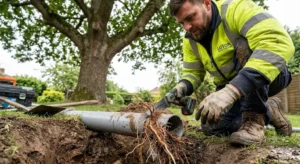
Luton has plenty of mature trees, particularly in established residential areas such as Bury Park, Stopsley, and Bramingham. Tree roots naturally seek out moisture, and underground drainpipes are an easy target. Roots can work their way into tiny cracks or loose joints, and once inside, they expand and trap debris, eventually causing serious blockages or even pipe damage.
This is one of the few causes that will not resolve with basic drain rodding alone, since the roots keep growing back unless the entry point is properly repaired or the pipe is relined.
5. Ageing Pipework in Victorian and Edwardian Properties
A large share of Luton’s housing, especially around the town centre and older terraced streets, dates back to the Victorian and Edwardian eras. These properties often still rely on narrow clay pipes that are now well over a century old. Decades of use, combined with shifting clay soil common across Bedfordshire, can cause joints to loosen or pipes to partially collapse.
Post war council and semi detached homes across Luton sometimes have pitch fibre pipework instead, which softens and deforms with age, reducing flow and catching debris more easily than modern plastic pipes.
6. Hard Water and Limescale Build Up
Luton sits within a hard water supply area managed by Affinity Water. Over time, the minerals in hard water form limescale deposits on the inside of pipes, gradually reducing their diameter. This does not usually cause a blockage on its own, but it significantly speeds up how quickly grease, hair, and other debris get trapped, making blockages more frequent in homes across the town.
Signs You Have a Blocked Drain
Common warning signs to watch for in your home include:
- Water draining slower than usual from sinks, baths, or showers
- Gurgling sounds coming from toilets or plugholes
- Unpleasant odours near drains, manholes, or outdoor gullies
- Water backing up or pooling around outdoor drain covers
- Toilets that struggle to flush properly
Catching these signs early, rather than waiting for a full blockage, usually means a faster and cheaper fix.
Frequently Asked Questions
What is the most common cause of blocked drains in Luton?
Grease and fat build up in kitchen pipes is the leading cause, followed closely by hair and soap scum in bathroom drains.
Why are older Luton homes more prone to blocked drains?
Many Victorian and Edwardian properties still use original clay or pitch fibre pipework, which is more vulnerable to root intrusion, joint movement, and gradual deterioration than modern plastic pipes.
Does hard water cause blocked drains?
Not directly, but limescale from Luton’s hard water supply narrows pipes over time, making it easier for grease, hair, and debris to catch and form a blockage.
Can I prevent tree root blockages myself?
You can reduce the risk by avoiding planting trees near drain runs, but existing root intrusion usually needs a CCTV drain survey and professional repair to resolve properly.
Final Thoughts
Blocked drains rarely happen without warning. In most Luton homes, the cause comes down to everyday habits like pouring grease down the sink, or to the age and condition of the property’s pipework. Knowing which of these applies to your home makes it far easier to prevent the next blockage, rather than just clearing the current one.