

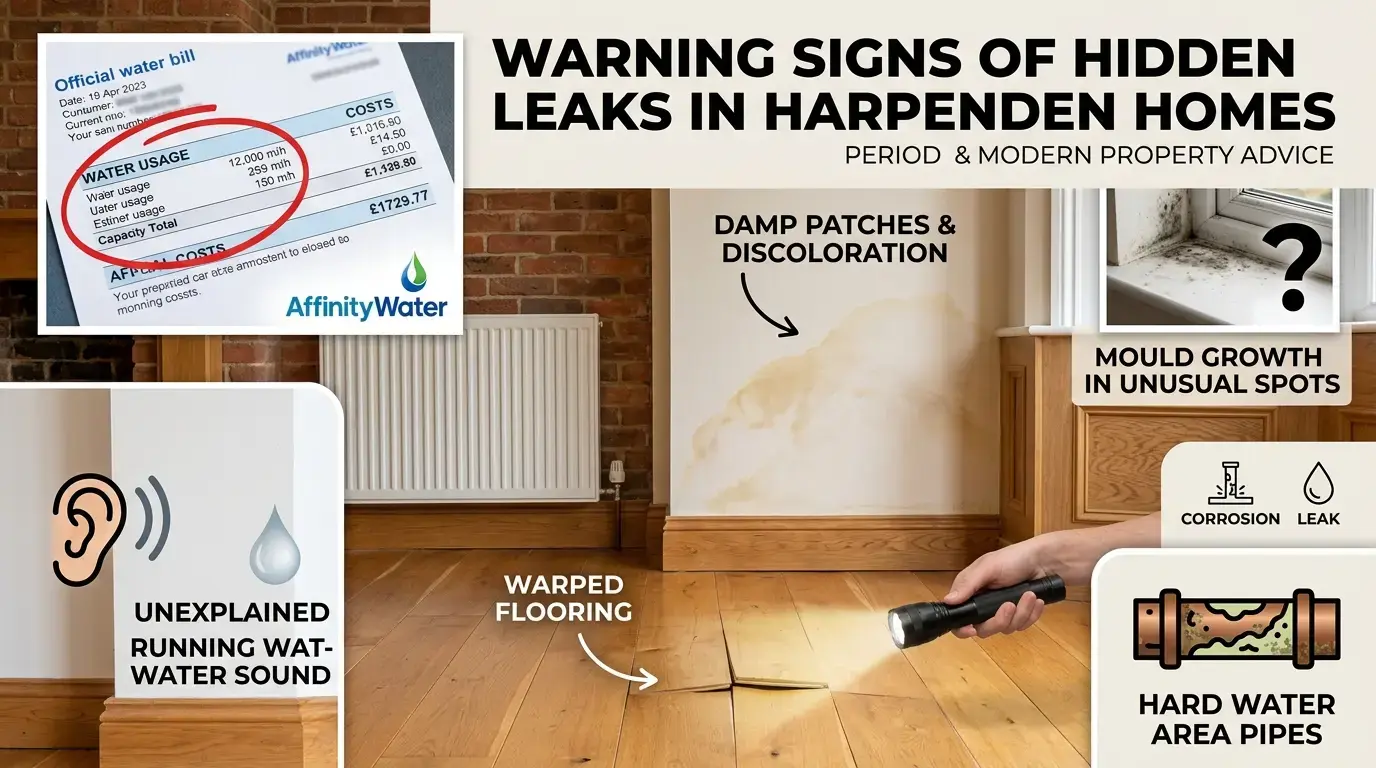
A hidden water leak in your Harpenden home usually reveals itself through a sudden rise in your water bill, damp or discoloured patches on walls and ceilings, a musty smell that will not go away, weak water pressure, the sound of running water when nothing is switched on, mould growth in unusual spots, and warped or lifting flooring. If you are noticing even one of these, it is worth investigating before the damage spreads further behind your walls or under your floors.
Harpenden’s mix of period Victorian and Edwardian properties alongside newer developments means plumbing systems here vary widely in age and condition. Add to that the naturally hard water supplied across much of Hertfordshire by Affinity Water, and pipework in this area is more prone to limescale buildup, corrosion, and slow, hidden leaks than you might expect. Below is a closer look at each warning sign, what it usually means, and what you should do about it.

1. A Water Bill That Keeps Climbing for No Reason
If your household habits have not changed but your water bill has, that is often the clearest early clue. A dripping pipe hidden inside a wall cavity or beneath a floor can waste hundreds of liters a month without ever becoming visible. Compare your last few bills, and if usage keeps rising while your routine stays the same, a leak is a likely culprit.
Quick check: Turn off every tap and appliance in the house, note the reading on your water meter, wait an hour without using any water, then check it again. If the number has moved, water is escaping somewhere in the system.
2. Damp Patches, Stains, or Discoloration on Walls and Ceilings
Yellow, brown, or grey staining on plasterwork is a classic sign that water has been sitting behind the surface for some time. In older Harpenden homes with lath and plaster ceilings, this can spread quietly for weeks before it becomes obvious, since the moisture has to soak all the way through before it shows.
Do not assume a small mark is old or harmless just because it feels dry to the touch. Staining often appears well before the area feels wet, and it tends to grow or darken if the leak is still active.
3. A Musty or Damp Smell That Will Not Clear
A persistent, stale odor in a room, cupboard, or under the stairs is frequently the first thing people notice, even before any visible signs appear. This smell comes from trapped moisture that has nowhere to evaporate, which is common where water is leaking inside a wall cavity, under floorboards, or around a boiler or hot water cylinder.
If cleaning, ventilating, or airing the room does not shift the smell within a day or two, it is worth having a plumber inspect the area rather than masking it with air fresheners.
4. Mould or Mildew Appearing Somewhere Unexpected
Mould needs consistent moisture to grow, so its appearance in a spot that would not normally be damp, such as a bedroom skirting board or the back of a kitchen cupboard, is a strong indicator of a hidden leak nearby. This is worth taking seriously beyond the cosmetic issue, since damp conditions can also affect indoor air quality and are best dealt with quickly in a home with young children or anyone with respiratory sensitivities.
5. A Noticeable Drop in Water Pressure
When water escapes through a crack or a failing joint before it reaches your taps or shower, less pressure arrives at the fixture. If your shower has gradually become weaker, or one tap in particular has lost force while others are fine, that localized drop often points to a leak somewhere along the pipe run feeding that fixture.
This is especially common in older Harpenden properties where original copper pipework has started to corrode internally, a process that hard water tends to speed up over the years.
6. Hearing Water When Nothing Is Turned On
Your plumbing should be silent whenever every tap, toilet, and appliance is switched off. A gurgling, trickling, or hissing sound coming from inside a wall or beneath the floor almost always means water is moving somewhere it should not be. Listen closely near bathrooms, the kitchen, and any wall that backs onto the water supply, since these are the most common locations for a hidden pipe leak.
7. Warped Flooring, Bubbling Paint, or Soft Skirting Boards
Moisture that has been present for a while will eventually affect the surfaces around it. Laminate or wooden flooring that has started to lift, cup, or feel soft underfoot, paint or wallpaper that is bubbling, or skirting boards that feel spongy rather than firm are all signs that water has been sitting nearby for longer than you might think. By this stage, the leak has usually been active for weeks or months, so it is best treated as urgent.
Why Hidden Leaks Are Especially Worth Watching in Harpenden
Homes across Harpenden and the wider St Albans district sit in a hard water area, which means limescale builds up inside pipes and fittings faster than in soft water regions. This buildup can mask small leaks for a while, then suddenly give way, turning a slow drip into a bigger problem. Combined with the number of period properties in the town, where original pipework may be decades old, it is worth having your plumbing checked periodically even if nothing seems obviously wrong.
What to Do if You Suspect a Hidden Leak
Start with the water meter test described above, and take a walk around your home checking for any of the signs listed. If you find one, or the meter test confirms unexplained usage, avoid trying to trace the leak yourself by opening up walls or flooring, since this can cause unnecessary damage and cost more to repair. A professional leak detection survey uses specialist equipment to pinpoint the exact source without invasive digging or demolition.
Frequently Asked Questions
How can I tell if a leak is behind a wall or under the floor?
Listen for sounds of running water when fixtures are off, and check which side of the wall or which section of flooring feels warm, damp, or shows staining first, since this usually indicates the nearest point to the source.
Can a hidden leak really increase my water bill significantly?
Yes. Even a slow drip can waste a large volume of water over a month, and a leak that has gone unnoticed for weeks can add a noticeable amount to your bill before any visible damage appears.
Is it worth getting a professional leak detection survey rather than checking myself?
For anything beyond the basic water meter test, yes. Professional equipment can locate a leak accurately without the guesswork or damage involved in opening up walls and floors yourself.
If you recognize any of these signs in your Harpenden home, it is better to have it checked sooner rather than later. Get in touch with our team for a leak detection survey, and we will help you find the source before it turns into a bigger repair.