

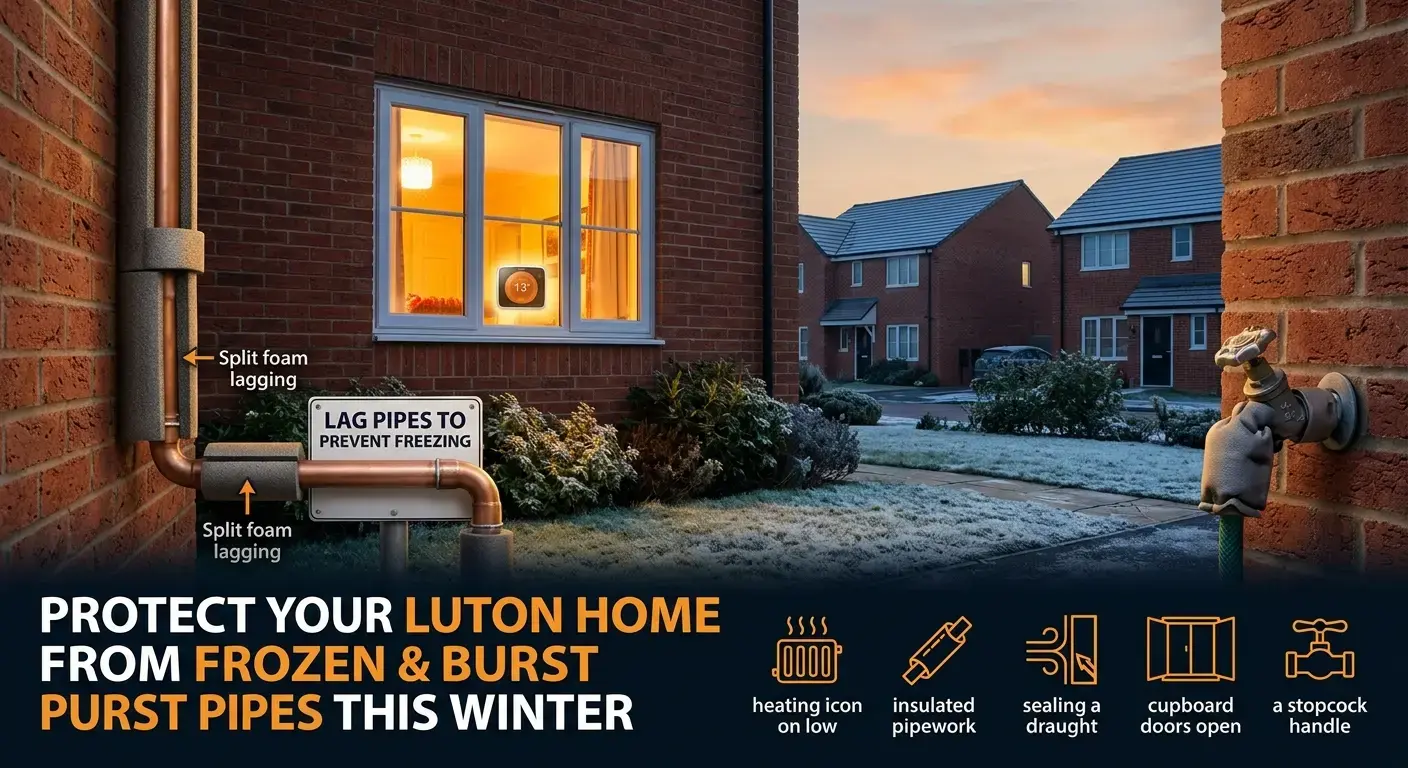
Protect your pipes from freezing this winter in Luton by keeping your heating on low even when you are out, insulating any pipework in your loft, garage or under sinks, sealing draughts near pipe runs, and knowing where your stopcock is in case something goes wrong. These five habits stop the vast majority of frozen and burst pipe callouts we see across LU postcodes every year.
Luton gets its fair share of hard frosts between December and February, and the town’s mix of housing, from Victorian terraces in the centre to 1960s semis in Lewsey Farm and newer builds in Kingsbrook, means pipework sits in very different conditions from one street to the next. Older homes often have pipes running through cold lofts and unheated extensions with little to no lagging, while some newer properties have long external pipe runs feeding outbuildings or garages. Both setups are exposed when the temperature drops.
Why Frozen Pipes Are a Bigger Problem Than They Sound
A frozen pipe on its own is usually just an inconvenience. The real danger is what happens as the ice inside expands. That pressure has to go somewhere, and if the pipe cannot take it, it splits. You often will not notice the crack until the ice melts and water starts pouring out, sometimes into a wall cavity or ceiling void where it can sit unnoticed for hours. By the time a stain appears on a ceiling, the damage underneath is usually already done.
This is why prevention matters far more than reacting after the fact. A burst pipe repair is a straightforward job for a plumber. Drying out a flooded loft, replacing sodden plasterboard, or dealing with damp that sets into insulation is a much bigger and more expensive undertaking.
Which Pipes in Your Home Are Most at Risk
Not every pipe freezes at the same rate. The ones to worry about are:
- Pipework in lofts, especially near the eaves where cold air gets in
- Pipes in garages, sheds or outbuildings that are not heated
- Supply pipes running along external walls, particularly on the north facing side of a property
- Outdoor taps and any hose connections left attached over winter
- Pipes under kitchen or bathroom sinks that sit inside cold cupboards
If your home has had an extension built at any point, it is worth checking how the pipework was routed. Extensions sometimes have pipes running through spaces that were never designed to be part of the main heated envelope of the house, which leaves them more exposed than people expect.
Steps to Stop Your Pipes Freezing
Keep the Heating On, Even at Low Level
Turning the heating off completely to save money is one of the most common mistakes we see, particularly when people go away for a few days. A consistent low setting, around 12 to 13 degrees, keeps enough warmth moving through the system to stop water sitting still and freezing. If you have a smart thermostat, set a minimum temperature so it kicks in automatically rather than relying on remembering to check the app.
Insulate Exposed Pipework Properly
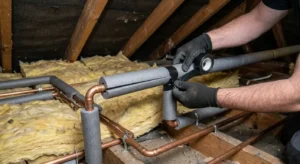
Foam pipe lagging is cheap and takes very little time to fit. Slide it over any pipe you can access in the loft, garage or under a sink, and make sure the joints and bends are covered too, since these are the weak points where cold air gets in. For pipes running along an external wall inside a cold room, lagging combined with sealing any gaps around the pipe where it passes through brickwork or a floor makes a noticeable difference.
Seal Draughts Around Pipe Runs
Cold air moving through gaps around pipes, air bricks or loft hatches can undo a lot of the good work insulation does. Check where pipes pass through external walls or floors and seal any visible gaps with expanding foam or sealant. This also helps with your heating bills, so it is worth doing regardless of the season.
Open Cupboard Doors Under Sinks
On the coldest nights, leaving cupboard doors open under your kitchen and bathroom sinks lets warm room air reach the pipework inside. It costs nothing and takes seconds, but it is one of those small habits that genuinely helps on nights when temperatures drop well below zero.
Deal With Outdoor Taps Before the Cold Arrives
Disconnect hoses from outdoor taps and, if your tap has an isolation valve, shut it off and drain the short length of pipe leading to it. An outdoor tap cover adds another layer of protection and is worth the small cost if your tap sees regular winter frost.
Know Your Stopcock Before You Need It
Every household should know exactly where the internal stopcock is and check that it turns freely, not just when there is already water on the floor. It is usually found under the kitchen sink, though in some Luton properties, particularly older terraces, it can be tucked away in a hallway cupboard or under the stairs. Finding it now, while nothing is wrong, saves precious minutes if a pipe does burst.
If You Are Going Away During Winter
Leaving a property empty is one of the biggest risk factors for frozen pipes, because there is no one there to notice a problem early. Before you go, set your heating to a consistent low temperature rather than turning it off, and if possible, ask a neighbour or family member to check the property every few days. For longer absences, it may be worth turning off the water supply at the stopcock and draining the system, though this is worth discussing with a plumber first if you are unsure how your particular heating setup will be affected.
What to Do if a Pipe Has Already Frozen
If you turn on a tap and nothing comes out, or only a trickle appears, you likely have a frozen section somewhere in the system. Turn off the main stopcock as a precaution, since a frozen pipe that has already cracked will only start leaking once the ice inside begins to melt. You can gently warm the affected section with a hairdryer on a low setting or warm towels, working from the tap end back toward the blockage, but never use a naked flame or anything that heats the pipe too quickly, as sudden temperature changes are what cause pipes to split.
If you cannot locate the frozen section, if the pipe has visibly cracked, or if water is already coming through a ceiling or wall, stop trying to fix it yourself and call a plumber straight away.
When to Call an Emergency Plumber
Some situations need a professional response rather than a DIY fix. Call an emergency plumber if you notice a burst or cracked pipe, water coming through a ceiling or light fitting, a sudden drop in boiler pressure alongside no hot water, or a stopcock that will not turn. ZM Plumbers covers Luton and the surrounding LU postcodes with a genuine 24/7 emergency service, and our engineers carry the parts needed to fix most frozen and burst pipe issues on the first visit.
Frequently Asked Questions
How cold does it need to be for pipes to freeze in the UK?
Pipes are generally at risk once outside temperatures drop to freezing or below for several hours, though poorly insulated or exposed pipes can freeze even faster during a sharp cold snap.
Can a frozen pipe unfreeze on its own?
It can, but this is not something to rely on. If a pipe has cracked while frozen, it will only start leaking once it thaws, so it is safer to locate and address the problem rather than wait it out.
Should I leave a tap dripping to stop pipes freezing?
A slow drip can relieve pressure in a pipe and reduce the chance of it splitting during a cold snap, though proper insulation and consistent heating are more reliable ways to prevent freezing in the first place.
What temperature should I set my heating to when away in winter?
Around 12 to 13 degrees is generally enough to keep water moving through the system and stop pipes from freezing while you are away from the property.
Is it more expensive to insulate pipes or repair a burst pipe?
Insulating pipework typically costs very little compared to the cost of repairing a burst pipe, particularly if water has already caused damage to walls, ceilings or flooring.
If your pipes have already frozen or you are dealing with a burst pipe anywhere in Luton, call ZM Plumbers on 07397 071028 for a fast, Gas Safe registered response.