

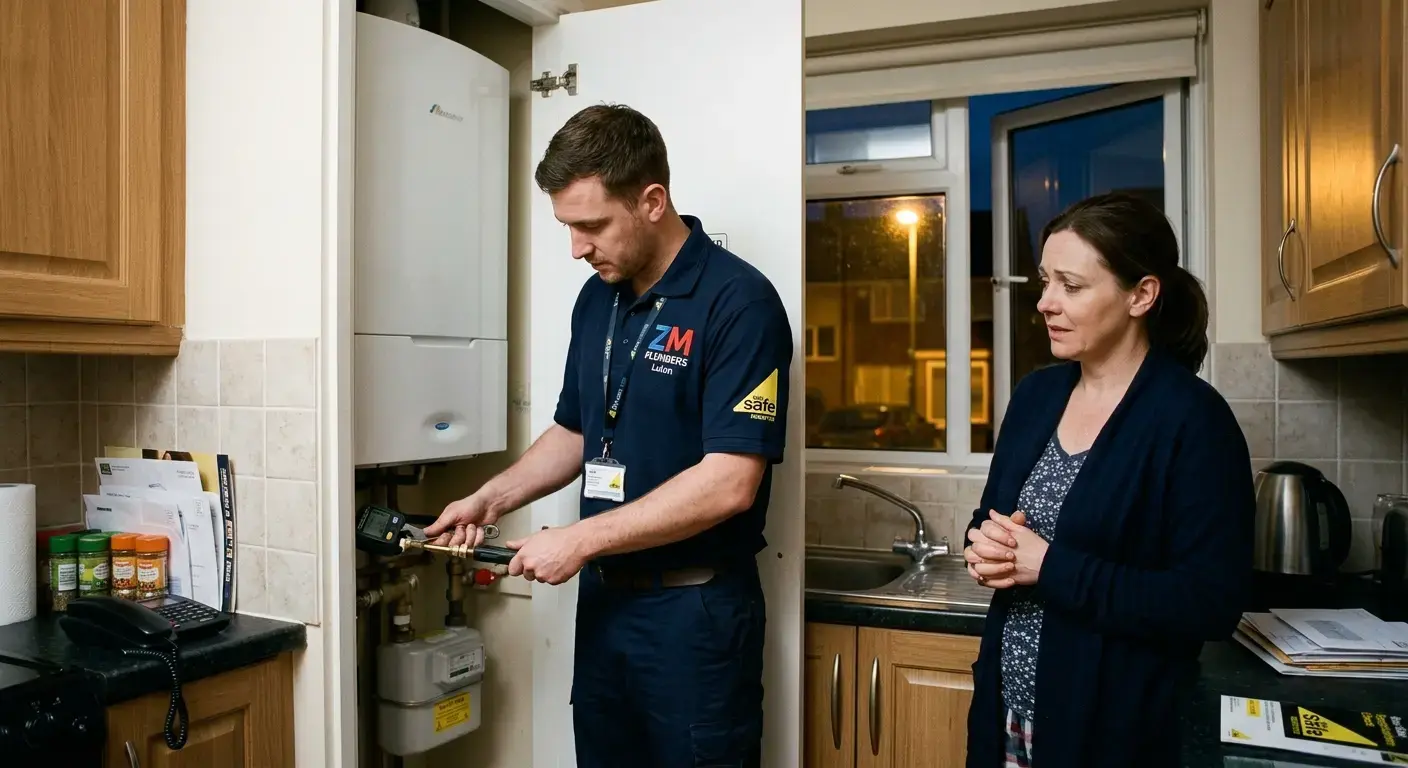
A gas leak is one of the few plumbing emergencies where minutes matter more than money, and same day gas leak detection and repair in Luton is exactly what turned a frightening afternoon into a safe, resolved evening for one local family. This is the real story of how it happened, what our engineers found, and what every Luton homeowner should know if they ever smell gas in their own home.
The Call: “I Think I Smell Gas”
It started with a phone call just after 4pm on a weekday. A homeowner in the Farley Hill area of Luton rang our emergency line, her voice tense. She had walked into her kitchen and caught a faint, sulphur like odour near the boiler cupboard. She wasn’t certain it was gas. She just knew something was off.
That uncertainty is common, and it’s actually a good instinct to act on. Natural gas itself has no smell at all. Suppliers add a chemical called mercaptan specifically so leaks are noticeable, and it’s often described as smelling like rotten eggs. If a homeowner picks up on that smell, their nose is doing exactly what it’s supposed to do.
Our advice to her was immediate and non negotiable: turn off the gas supply at the meter if it could be reached safely, open windows and doors, avoid switching any electrical switches on or off, put out any naked flames, and leave the property until help arrived. We also confirmed she’d already been advised to contact the National Gas Emergency Service on 0800 111 999, which is the correct first call for any suspected leak, since they can isolate supply at a wider level if needed.
Why We Treat Every Gas Smell as Genuine Until Proven Otherwise
Some tradespeople might be tempted to downplay a call like this until they’ve seen the property. We don’t operate that way. Gas leaks carry two distinct risks: explosion or fire from ignition, and carbon monoxide poisoning if the leak is linked to a faulty appliance rather than a pipe. Carbon monoxide is invisible, tasteless and odourless on its own, which is why it’s often called the silent killer, and it can build up quietly even when a homeowner doesn’t notice anything unusual besides a headache or drowsiness.
Because of that, our policy is simple. Any report of a gas smell in Luton gets treated as a same day emergency, not a “we’ll fit you in next week” job. Our engineers are Gas Safe registered, which under UK law is a legal requirement for anyone carrying out work on gas appliances, pipework or boilers. It’s also the fastest way for a homeowner to verify a genuine engineer, since every registered professional carries an ID card that can be checked against the Gas Safe Register.
Arriving On Site: The Diagnostic Process
Our engineer reached the property within the hour. The first job on arrival wasn’t to start searching for the leak. It was to confirm the property was safe to enter and that the gas supply was already isolated, which it was, thanks to the homeowner following our earlier instructions.
From there, the diagnosis followed a structured process rather than guesswork:
Visual inspection of pipework and fittings. Older Luton homes, especially the 1960s and 70s properties common in areas like Lewsey Farm and Farley Hill, often have pipework and joints that have shifted slightly over decades of use. A visual check around the boiler, meter and any visible gas runs can reveal obvious corrosion, loose fittings or damaged flexible connectors.
Gas tightness testing. This is the core of professional leak detection. Using a pressure gauge connected to the system, the engineer checks whether pressure holds steady over a set period. A drop in pressure confirms a leak exists somewhere in the system, even if it isn’t visible.
Electronic gas detection. A handheld gas detector was used to trace the leak’s exact location without needing to dismantle pipework or lift flooring. This method is quick and avoids unnecessary disruption to the home, which matters a great deal to homeowners who don’t want a small job turning into a renovation.
In this case, the source turned out to be a worn compression fitting on the pipe feeding the boiler, likely degraded through age rather than any fault of the homeowner. It was a small point of failure, but under sustained gas pressure, small failures are exactly how leaks start.
The Repair: Getting the Home Back to Safe and Warm
Once the exact fitting was identified, the repair itself was straightforward for a Gas Safe registered engineer carrying the right stock. The damaged fitting was removed and replaced with a new, correctly rated component, and the joint was resealed to manufacturer standard.
After the repair, the job wasn’t considered finished. A second tightness test was carried out to confirm the fix had actually resolved the pressure drop, and the boiler was checked for correct ignition and combustion once the supply was restored. Only after both checks passed was the gas turned back on and the home confirmed safe.
The homeowner had heating and hot water again by early evening, on the same day she’d first noticed the smell. No overnight wait, no temporary fix, and no guesswork left hanging over the household.
What This Case Study Teaches Every Luton Homeowner
This wasn’t an unusual job for us, and that’s the point. Gas leaks caused by ageing fittings and worn pipework are common across Luton’s housing stock, particularly in older properties. A few lessons are worth repeating for anyone reading this in their own kitchen right now.
If you smell gas, don’t wait to see if it goes away. Leave the property, ventilate if it’s safe to do so on your way out, and call the National Gas Emergency Service before anything else. Trust the smell over your uncertainty. Insist on Gas Safe registration and ask to see ID before letting any engineer work on your gas system. And treat any gas related repair as a same day priority, not something to schedule around your week.
Frequently Asked Questions
How do I know if I have a gas leak in my home?
The clearest sign is a distinct rotten egg smell near appliances, meters or pipework, since suppliers add mercaptan to otherwise odourless natural gas for exactly this reason. Other signs include a hissing sound near gas pipes, dead or discoloured plants near an outdoor gas line, unusually high gas bills, or physical symptoms like headaches, dizziness or nausea that ease when you leave the house.
What should I do immediately if I smell gas?
Turn off the gas supply at the meter if you can reach it safely, open doors and windows, avoid using any electrical switches, extinguish naked flames, and leave the property. Call the National Gas Emergency Service on 0800 111 999, then contact a Gas Safe registered engineer for inspection and repair.
Can a gas leak be fixed the same day it’s reported?
In most cases, yes. Once a Gas Safe registered engineer locates the source through tightness testing and gas detection equipment, repairing a faulty fitting, joint or pipe section is typically a same day job, as it was in this case in Luton.
Is it safe to stay in my home while waiting for a gas engineer?
No. If you suspect a gas leak, you should leave the property and wait outside or at a neighbour’s until it has been declared safe by a professional or the National Gas Emergency Service.
How can I confirm an engineer is qualified to work on gas appliances?
Ask to see their Gas Safe ID card on arrival, which will show their registration number and the specific types of gas work they’re qualified to carry out. You can also check their registration directly on the Gas Safe Register website.
How often should gas pipework and appliances be checked to prevent leaks?
An annual gas safety check is recommended for all homes, and it’s a legal requirement for landlords, who must obtain a CP12 Landlord Gas Safety Certificate each year. Regular servicing catches worn fittings and early corrosion before they become emergencies.
If you smell gas anywhere in your home, don’t wait for it to pass. Call ZM Plumbers for same day gas leak detection and repair in Luton, carried out by fully qualified Gas Safe registered engineers who treat every callout as the emergency it is.