
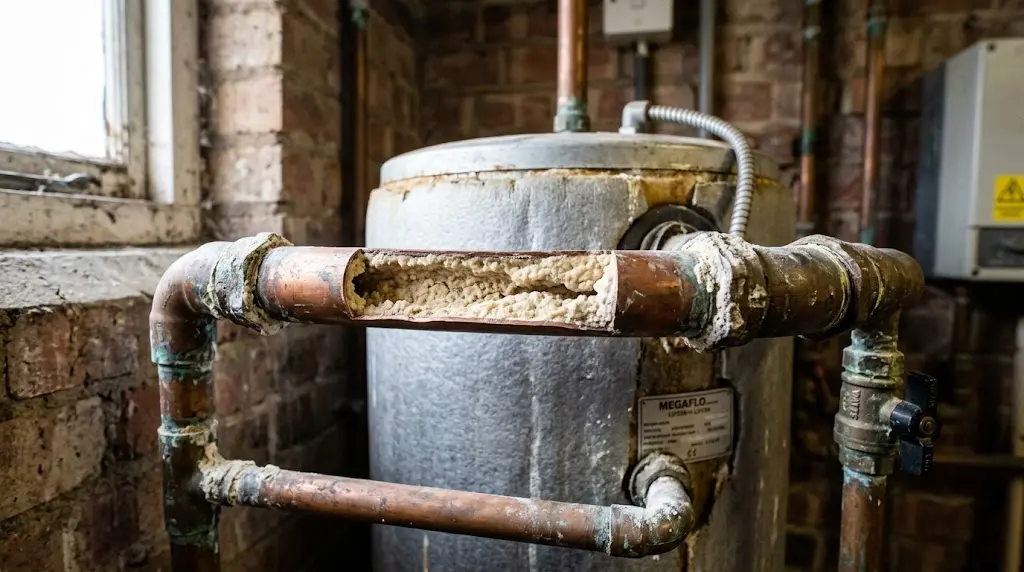
Luton’s hard water is damaging your pipes and appliances because it carries an unusually high concentration of dissolved calcium and magnesium, roughly 320 mg/l of calcium carbonate according to regional water quality data, well above the UK average of around 170 mg/l. Every time water heats up in a kettle, boiler, or washing machine, some of those minerals turn into a hard chalky deposit called limescale, and that limescale is what quietly narrows pipework, clogs heating elements, and shortens the working life of household appliances across town.
If you live anywhere in LU1, LU2, LU3, or the surrounding postcodes, this isn’t a maybe. Affinity Water, which supplies most of Luton from chalk aquifer sources, has confirmed the town sits among the hardest water areas in the country. That geology is great for the aquifer’s natural filtration, but it’s tough on your plumbing.
What Actually Makes Luton’s Water So Hard
Luton sits on a thick bed of chalk. As rainwater filters down through this rock on its way to the aquifer, it dissolves calcium and magnesium along the way. By the time it reaches your taps, it’s classified as “very hard,” a tier above the “hard” rating given to many other UK towns.
This isn’t a fault in the supply network and it isn’t unsafe. Affinity Water treats and tests it to Drinking Water Inspectorate standards, so it’s perfectly fine to drink. The issue is purely mechanical: those minerals don’t disappear when the water is heated, they crystallise and stick.
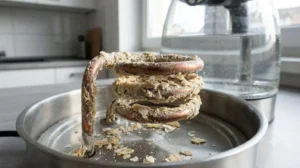
How Limescale Forms Inside Your Home
When hard water is heated or its pressure drops, calcium bicarbonate converts into calcium carbonate, the rock like substance most people call limescale. It clings to whatever surface the water touches: the inside of copper or plastic pipework, immersion heaters, boiler heat exchangers, showerheads, and washing machine drums.
At first it’s barely noticeable. Over months and years, though, the layer thickens, and that’s when problems for your plumbing begin.
The Damage Building Up Inside Your Pipes
Scale buildup inside pipework doesn’t happen overnight, but it is cumulative, and Luton households often only notice once the symptoms are well underway.
Here’s what typically happens:
Reduced flow and water pressure, as the internal diameter of the pipe narrows with every passing month of scale accumulation.
Accelerated corrosion, since limescale can trap moisture against metal pipe walls, allowing rust to eat into the material faster than it otherwise would.
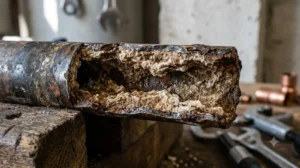
Weakened, brittle pipework, particularly in older Luton properties still running on original copper or galvanised steel, where decades of scaling leave the pipe structurally thinner and more prone to splitting.
Higher risk of leaks and bursts, the eventual outcome once narrowing and corrosion combine under normal household water pressure.
None of this is instant. It’s a slow, grinding process, which is exactly why so many homeowners are surprised when a pipe fails seemingly out of nowhere. The scale had been working against it for years.
The Appliances Taking the Hit
Anything in your home that heats or moves water is a target. In a very hard water town like Luton, that includes:
Combi boilers and hot water cylinders, where scale coats heating elements and heat exchangers, forcing the system to burn more gas or electricity to reach the same temperature.
Washing machines and dishwashers, where mineral deposits clog spray jets, damage rubber seals, and leave clothes feeling stiff and glassware looking cloudy even after a full cycle.
Kettles and coffee machines, the most visible casualties, often needing descaling within weeks of a good clean.
Showerheads and taps, where scale physically blocks the small holes, reducing spray pressure and eventually seizing moving parts.
A few Luton households will notice their boiler warranty doesn’t fully cover scale related failures either, since many manufacturers exclude damage caused by untreated hard water, which makes prevention even more worthwhile.
Signs Hard Water Is Already Affecting Your Home
You don’t need a plumber’s toolkit to spot the early warning signs. Watch for:
White, chalky crust around tap spouts, showerheads, and kettle elements.
A gradual drop in water pressure that isn’t linked to a leak or a valve issue.
Rising energy bills without any change in usage, often a sign your boiler is working harder against scale.
Cloudy glassware and stiff, dull laundry, even straight out of the dishwasher or washing machine.
Appliances failing earlier than their expected lifespan, particularly water heaters and washing machine pumps.
What You Can Actually Do About It
The good news is that hard water damage is very preventable once you know what you’re dealing with. A few practical steps make a real difference:
Install a whole house water softener. This is the most comprehensive fix, treating water at the point it enters your property so every tap, appliance, and pipe benefits, not just one fixture.
Fit a scale reducer or conditioner if a full softener isn’t practical, particularly useful for renters or smaller properties.
Descale kettles, showerheads, and washing machine drums regularly, ideally every few weeks given Luton’s hardness level.
Have your boiler serviced annually, so a qualified engineer can check the heat exchanger and elements for scale before it becomes a costly repair.
Get older pipework inspected, especially in period Luton properties, where decades of untreated hard water may already have thinned or narrowed the internal pipe diameter.
When It’s Time to Call a Local Plumber
Some of this is manageable with routine maintenance, but scale damage that’s already affecting flow, pressure, or appliance performance usually needs a professional eye. A local plumber who understands Luton’s specific water hardness, rather than a generic national callout service, will know exactly where scale tends to build up first in this area, whether that’s ageing copper pipework in the older LU1 terraces or heat exchangers in newer combi boiler installations across the borough.
At ZM Plumbers, this is a familiar job. Diagnosing scale related pipe damage, fitting water softeners, and servicing boilers strained by Luton’s very hard water supply are all part of everyday work, and catching the problem early is almost always cheaper than waiting for a pipe to fail.
Frequently Asked Questions
Is Luton’s tap water safe to drink despite being hard?
Yes. Hardness is a mineral content issue, not a safety issue. Affinity Water treats and tests supplies to meet UK Drinking Water Inspectorate standards.
How do I know if my Luton home has hard water?
If you’re on mains supply anywhere in the LU postcode area, you almost certainly do. Limescale around taps and kettles, cloudy glassware, and reduced shower pressure are the clearest household signs.
Does a water softener really protect my pipes?
Yes, over time. A softener removes the calcium and magnesium before they reach your pipework and appliances, which stops new scale from forming and lets a plumber address any existing buildup separately.
How often should appliances be descaled in a very hard water area like Luton?
Kettles and showerheads benefit from descaling every few weeks. Washing machines and dishwashers should be treated monthly, and boilers should get a professional check at least once a year.
Can hard water actually cause a pipe to burst?
Indirectly, yes. Scale narrows the pipe and traps corrosion causing moisture against the walls, weakening the material over years until it eventually cracks or splits under normal pressure.