
Blocked drains can be prevented by avoiding grease, food scraps, hair, wet wipes, and other debris from entering your plumbing system. Regular cleaning, installing drain strainers, flushing drains with hot water, and scheduling routine plumbing inspections are the most effective ways to keep household drains flowing smoothly. Preventive maintenance is far less expensive than repairing a serious blockage or damaged pipe.
Why Preventing Blocked Drains Matters
A blocked drain is one of the most common plumbing problems homeowners face. While it may begin with slow draining water, ignoring the issue can lead to unpleasant odors, overflowing sinks, pipe damage, mold growth, and costly plumbing repairs.
The good news is that most drain blockages are preventable with a few simple habits. Understanding what causes clogs and maintaining your plumbing system regularly can save both time and money.
What Causes Blocked Drains?
Before learning how to prevent blocked drains, it helps to understand the most common causes.
Grease and Cooking Oil
Many people pour cooking oil, butter, or grease down the kitchen sink. Although these substances are liquid when hot, they harden as they cool and stick to the inner walls of pipes. Over time, they trap food particles and create stubborn blockages.
Food Waste
Coffee grounds, rice, pasta, eggshells, fruit peels, and fibrous vegetables can accumulate inside kitchen pipes. Even homes with a garbage disposal should avoid sending large quantities of food waste into the drain.
Hair and Soap Residue
Bathroom drains frequently become clogged due to hair mixing with soap residue. This combination forms dense masses that restrict water flow and become increasingly difficult to remove.
Wet Wipes and Hygiene Products
Many products advertised as flushable do not break down like toilet paper. Wet wipes, cotton buds, sanitary products, dental floss, and paper towels often cause severe toilet and sewer blockages.
Tree Roots
Tree roots naturally seek moisture and can enter underground sewer pipes through tiny cracks. As they grow, they restrict wastewater flow and may eventually damage the pipe itself.
Mineral Buildup
Homes with hard water may experience mineral deposits forming inside pipes. These deposits reduce pipe diameter and increase the likelihood of blockages.
Best Ways to Prevent Blocked Drains
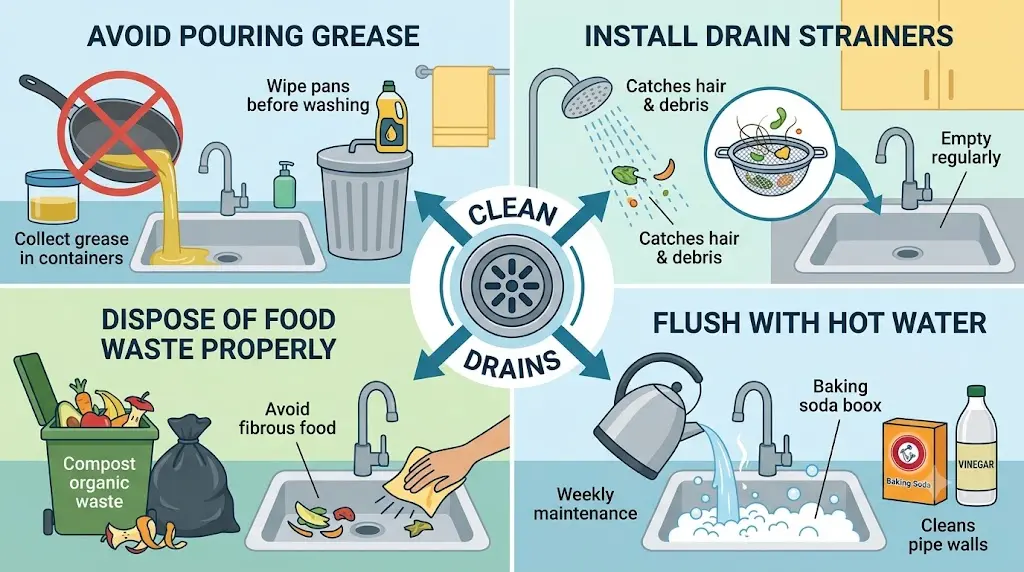
Never Pour Grease Down the Sink
Allow cooking grease to cool before placing it in a sealed container for disposal. Wipe greasy pans with paper towels before washing them to minimize residue entering the drain.
Install Drain Strainers
Drain strainers are inexpensive but highly effective. They capture food scraps in the kitchen and collect hair in bathrooms before these materials enter the plumbing system.
Clean the strainers regularly to maintain proper water flow.
Dispose of Food Waste Properly
Place food scraps in a compost bin or household waste container instead of rinsing them into the sink.
Particular items to avoid include:
- Coffee grounds
- Pasta
- Rice
- Flour
- Vegetable peels
- Eggshells
- Bones
Flush Drains with Hot Water
Pouring hot water into kitchen drains once each week helps dissolve light grease deposits before they become major clogs.
For additional cleaning, use a mixture of baking soda followed by vinegar, then rinse thoroughly with hot water.
Keep Hair Out of Bathroom Drains
Brush your hair before showering whenever possible. Clean shower drain covers regularly to remove accumulated hair.
Removing hair immediately prevents it from combining with soap residue inside pipes.
Only Flush Toilet Paper
Your toilet should only receive human waste and toilet paper.
Avoid flushing:
- Wet wipes
- Cotton pads
- Cotton buds
- Paper towels
- Feminine hygiene products
- Dental floss
- Cat litter
Even products labeled as flushable may contribute to sewer blockages.
Clean Drains Regularly
Routine cleaning prevents gradual buildup that eventually causes slow drainage.
Natural cleaning methods work well for ongoing maintenance and reduce reliance on harsh chemical drain cleaners, which may damage older plumbing systems over time.
Schedule Professional Drain Inspections
A licensed plumber can inspect your drainage system using CCTV drain cameras to identify developing problems before they become emergencies.
Professional inspections are especially valuable for older homes or properties surrounded by large trees.
Warning Signs of a Developing Blocked Drain
Recognizing early symptoms allows homeowners to address problems before they worsen.
Watch for these warning signs:
- Water drains slowly.
- Gurgling sounds come from sinks or toilets.
- Unpleasant odors emerge from drains.
- Water backs up into sinks, showers, or bathtubs.
- Toilets require repeated flushing.
- Multiple drains clog at the same time.
If several fixtures experience drainage problems simultaneously, the issue may exist in the main sewer line rather than a single household drain.
Common Drain Maintenance Mistakes
Many homeowners unintentionally increase the risk of plumbing problems.
Common mistakes include:
- Pouring grease into the sink.
- Overusing chemical drain cleaners.
- Ignoring slow drainage.
- Flushing inappropriate items.
- Skipping regular maintenance.
- Planting large trees too close to sewer pipes.
Avoiding these habits significantly extends the lifespan of your plumbing system.
Simple Monthly Drain Maintenance Routine
A consistent maintenance routine helps prevent expensive plumbing emergencies.
Every month:
- Remove hair from bathroom drain covers.
- Clean sink strainers.
- Flush kitchen drains with hot water.
- Use baking soda and vinegar for natural cleaning.
- Check for slow drainage.
- Inspect exposed pipes for leaks.
These small tasks require only a few minutes but can prevent major repairs.
When to Call a Professional Plumber
While minor clogs can often be managed with preventive maintenance, some situations require professional assistance.
Contact a plumber if you notice:
- Frequent recurring blockages.
- Sewage backing up into your home.
- Water overflowing from outdoor drains.
- Multiple blocked fixtures.
- Persistent foul odors.
- Suspected tree root intrusion.
Professional plumbers may use hydro jetting, drain cameras, or specialized drain cleaning equipment to restore proper flow safely.
Frequently Asked Questions
How can I stop my drains from blocking?
Use drain strainers, avoid pouring grease or food scraps into sinks, clean drains regularly, flush with hot water, and only flush toilet paper. Regular maintenance is the best way to prevent blockages.
What is the main cause of blocked household drains?
The most common causes include grease, food waste, hair, soap residue, wet wipes, and tree roots entering underground pipes.
Is baking soda and vinegar good for drain maintenance?
Yes. Baking soda followed by vinegar can help remove light buildup and odors as part of regular maintenance. It is not always effective for severe blockages but works well as a preventive solution.
How often should drains be cleaned?
Most homeowners should perform basic drain maintenance once each month. Homes with heavy kitchen use or long hair may benefit from more frequent cleaning.
Can chemical drain cleaners damage pipes?
Repeated use of strong chemical cleaners may damage older pipes and plumbing fixtures. Mechanical cleaning methods and natural maintenance are generally safer for routine care.
Final Thoughts
Preventing blocked drains is much easier and less expensive than dealing with emergency plumbing repairs. Small habits such as disposing of grease properly, using drain strainers, cleaning drains regularly, and watching for early warning signs can keep your plumbing system operating efficiently for years.
By following these preventive practices and scheduling professional inspections when needed, homeowners can reduce the risk of unexpected drain problems, protect their property, and extend the life of their plumbing system.